

A good cleaning supplies list for business has two parts. The first is the consumables your staff and visitors use every day, such as hand soap, toilet paper, paper towels and bin bags. The second is the products and tools needed to clean, such as an all-purpose cleaner, glass cleaner, cloths and a mop. Most offices, practices and shops buy the consumables themselves. Who provides the cleaning products depends on how you work with your cleaning company, so agree on that clearly from the start.
Below you will find what usually belongs on the list, a checklist by area and how to decide how much to keep. We also cover the mistakes behind the classic Monday morning problem: an empty soap dispenser and no spare refill.
What belongs on a cleaning supplies list for business
It helps to sort the list by who uses it. Some items are used by everyone in the building all day. Others are only touched by whoever does the cleaning. When you mix both on one shopping list, the everyday items tend to run out first because nobody feels responsible for them.
A simple way to structure it is in three groups.
- Daily consumables for washrooms, kitchen and desks, used up and refilled all the time.
- Cleaning products for floors, surfaces, glass and sanitary areas.
- Tools and equipment such as cloths, mops, buckets, a vacuum cleaner and gloves.
A small agency with one floor in Pempelfort needs a shorter list than a shop with a customer toilet or a practice with a waiting room. The groups stay the same, only the amounts change.
Washroom and kitchen consumables
These are the items people notice when they are missing. A visitor will forgive a slightly dusty shelf, but not an empty toilet roll holder.
Washrooms
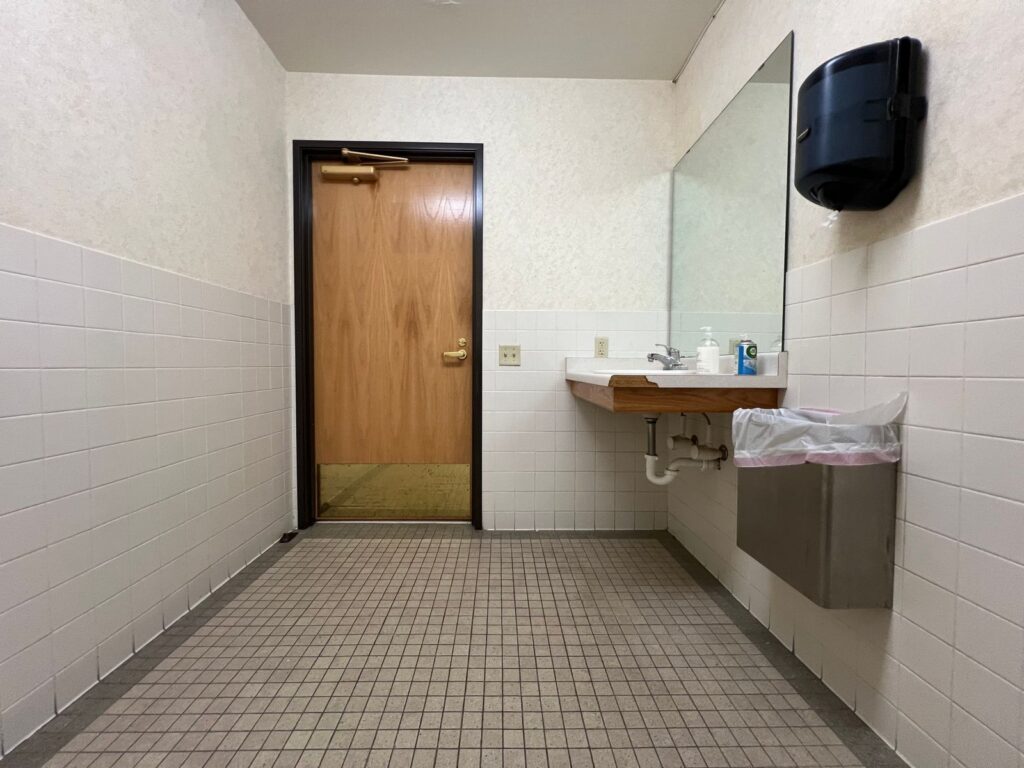
For each toilet and washbasin you need toilet paper, hand soap, paper towels or dispenser rolls, and liners for the small bins. If you have a women’s toilet, a sanitary bin with matching bags belongs on the list too. Many businesses also keep air freshener or a toilet spray, which is a matter of taste.
Check which refills your dispensers take before you order. Soap and paper dispensers are often made for one system only, and the wrong size simply does not fit. Write the exact product name on the list so anyone can reorder it.
Kitchen and break room
The office kitchen usually needs washing-up liquid, dishwasher tablets, a sponge or brush, tea towels, kitchen roll and bin bags for waste and recycling. If you have a coffee machine, add descaler and the cleaning tablets the manufacturer recommends. The fridge is easy to forget. A simple rule that everything unlabelled goes on Friday afternoon saves a lot of trouble.
Bin bags in the right sizes
Many offices in Germany separate paper, packaging, organic waste and general waste. That means bags in several sizes for different bins. Measure your bins once and note the size on the list. Bags that are too small tear, bags that are too large waste money.
Office cleaning supplies list: products and tools
For normal office cleaning you do not need a long row of special products. A short, well-chosen set covers most surfaces.
Cleaning products
- An all-purpose cleaner for desks, doors, handles and kitchen surfaces.
- Glass cleaner for glass doors, partitions and mirrors.
- A sanitary cleaner and toilet cleaner for washrooms.
- A floor cleaner suited to your floor, for example vinyl, tiles, laminate or parquet.
Practices often need a disinfectant for certain surfaces as well. Which one and where it is used should follow the practice’s own hygiene plan, so the practice usually decides this rather than the cleaner.
Tools
Microfibre cloths in at least two colours are a good start, one colour for washrooms and another for desks and kitchen. That way a toilet cloth never ends up on a keyboard. Add a mop with a bucket or a flat mop system and a vacuum cleaner with spare bags or filters. You also need a toilet brush per toilet and disposable gloves. A small step stool helps with high shelves and the top of cupboards.
Safety basics
Keep products in their original containers with the label on. Never mix cleaners, especially bleach-based products with acidic or ammonia-based ones, because this can release harmful fumes. Store everything in a cupboard that visitors and children in a waiting room cannot reach.
Commercial cleaning supplies checklist by area
Use this table as a starting point and cross out what you do not need. A small office without a kitchen will skip a row, a shop with a customer toilet will add one.
| Area | Consumables to stock | Products and tools |
|---|---|---|
| Washrooms | Toilet paper, hand soap, paper towels, small bin liners, sanitary bags | Sanitary cleaner, toilet cleaner, toilet brush, washroom cloths |
| Kitchen and break room | Washing-up liquid, dishwasher tablets, kitchen roll, tea towels, bin bags | All-purpose cleaner, sponges, descaler for kettle or coffee machine |
| Desks and meeting rooms | Tissues, small bin liners | All-purpose cleaner, microfibre cloths, screen-safe cloth |
| Floors | Vacuum bags or filters | Floor cleaner for your floor type, mop, bucket, vacuum cleaner |
| Entrance and glass | Doormat if needed | Glass cleaner, squeegee or glass cloth |
| Waste and recycling | Bags in the right sizes for each bin type | Gloves |
| Waiting room or sales area | Hand soap or hand sanitiser at the entrance if you use it | All-purpose cleaner for counters, handles and chairs |
What you stock and what a cleaning company brings
This is where most misunderstandings start. There is no single rule in the industry. Some cleaning companies bring all products and tools to every job. Others work with what is in the client’s cupboard, especially for regular weekly cleaning. Usually the business itself buys consumables like toilet paper, soap and bin bags, because these are used all week, not only on cleaning day.
Before the first cleaning, clarify three things in writing.
- Which products and tools stay on site, and who buys them.
- Who refills dispensers and toilet paper, and who reorders when stock runs low.
- Where the supplies are kept and who has access to that cupboard.
A short note such as “Cleaner refills soap and paper and tells the office manager on Thursdays what is running low” prevents most problems. It also makes clear that the cleaner is not expected to go shopping.
At Spotless, for regular cleaning we work with the products you have on site. For one-off jobs such as a deep clean we bring our own, and eco-friendly products are possible on request. Which supplies stay in your cupboard and who keeps an eye on them is agreed with each business, together with the scope and schedule. We offer regular office cleaning with individually agreed services and terms. The same cleaner comes each time, so they get to know your premises and where things are kept.
How much to keep in stock and when to reorder
How much a business uses depends on the number of people, the opening hours and how many visitors come in. A law firm with a few clients a day uses far less hand soap than a gym or a busy practice. Guessing usually leads to either a full storeroom or empty dispensers.
A better way is to count for a few weeks. Note how many rolls, refills and bags you open each week. After a month you have a realistic picture of your own usage, and you can set a simple reorder point for each item. When the stock reaches that point, you order.
Some practical tips help.
- Keep at least one full refill for every dispenser on site at all times.
- Put the reorder list inside the supply cupboard door, not in someone’s inbox.
- Order consumables and cleaning products on a fixed day, for example every second Monday.
- Give one person the job of ordering, with a stand-in during holidays.
Common mistakes with a cleaning business supply list
The most common mistake is having no clear owner. Everyone assumes someone else orders the paper towels, until a client asks for them. Name one person, even in a small team.
The second is buying too many different products. Five sprays that all do roughly the same thing take up space and confuse whoever cleans. A short set that fits your surfaces works better than a full shelf.
The third is ignoring the floor and surface types. A strong cleaner that is fine on tiles can dull an oiled parquet floor or leave streaks on a glass partition. Check the manufacturer’s care instructions for floors and furniture once, and buy to match.
The fourth is forgetting the tools. Old, greasy cloths and a worn mop spread dirt instead of removing it. Wash cloths regularly at a high temperature and replace mop heads when they look tired.
Finally, many businesses do not tell their cleaner when something changes. New dispensers, a new floor or a new coffee machine all affect the supply list. A quick message saves a wrong product being used.
Putting it together for your office, practice or shop
Start with the checklist above, cross out what does not apply, and add the exact product names and sizes. Decide who owns the list and count your usage for a month. Then agree with your cleaning company in writing which supplies they bring and which you provide. That is usually enough to keep a small office in Bilk or a shop in Oberkassel running without empty dispensers.
If you would rather hand over the cleaning, see how we work on our page about office cleaning in Düsseldorf for offices and practices. We work in Düsseldorf and the surrounding area. Tell us briefly which rooms need cleaning and how often, ideally with a few photos. You will get a free, non-binding quote with a final price through our quote request form.
Frequently asked questions about business cleaning supplies
What are the most important cleaning supplies for a small office?
Toilet paper, hand soap, paper towels and bin bags for daily use, plus an all-purpose cleaner, glass cleaner, sanitary cleaner, floor cleaner, microfibre cloths, a mop and a vacuum cleaner.
Does a cleaning company bring its own supplies?
It depends on the company and the agreement. Consumables like soap and toilet paper are usually bought by the business. At Spotless, regular cleaning uses the products you have on site, while for one-off jobs we bring our own.
Who should refill soap dispensers and toilet paper?
Either your staff or your cleaner can do it. What matters is that it is agreed in writing, including who notices low stock and who reorders.
How do I know how much to keep in stock?
Count how many rolls, refills and bags you open each week for about a month. Then set a reorder point for each item and keep at least one full refill per dispenser on site.
Can I ask for eco-friendly cleaning products?
Yes. Spotless uses eco-friendly products on request.