

A good medical office cleaning checklist splits the work into three rhythms. Every day you clean the waiting room, reception, treatment rooms and toilets, with a focus on the surfaces that many hands touch. Once a week you go deeper into furniture, fittings and corners. Once a month you take care of the things that are easy to forget, such as vents, high shelves and the floor behind equipment.
The plan below is a practical starting point for a GP surgery, a physiotherapy practice or a similar practice in Düsseldorf. It does not replace your practice’s hygiene plan. What applies to you depends on your specialty, so your own hygiene plan and the rules for your field always come first. Use this checklist to turn those rules into clear, everyday tasks.
Why a written checklist helps in a practice
In most practices, more than one person is involved in keeping the rooms clean. Medical staff wipe down treatment surfaces between patients. Someone tidies the waiting room at lunchtime. In the evening, a cleaner or a team member does the floors and the toilets. Without a written plan, each person assumes someone else has done the door handles.
A checklist makes the split visible. It answers three simple questions for every area. What gets cleaned, how often, and who is responsible. Imagine a small practice in Pempelfort where the receptionist leaves at 17:00 and the cleaning happens at 19:00. If the plan says the reception counter is part of the evening cleaning, it will not be skipped just because nobody saw it.
It also helps to be clear about what is not cleaning. Reprocessing instruments, handling medical waste and preparing treatment equipment stay with your trained practice team. A cleaning checklist covers rooms, surfaces, floors and sanitary areas.
Daily cleaning in the waiting room, reception and toilets
These are the areas every patient sees and touches. They set the first impression, and they carry the most traffic during the day.
Waiting room and corridors
- Wipe chair armrests, seat edges and tables, with disinfection where your hygiene plan asks for it.
- Clean door handles, light switches, handrails and the push plates on doors.
- Empty bins and replace bin liners.
- Vacuum or mop the floors, paying attention to the entrance area in wet weather.
If you keep magazines or children’s toys in the waiting room, decide how they are handled. Many practices have removed them or keep only items that can be wiped easily.
Reception
The counter is touched all day by patients handing over insurance cards and signing forms. Wipe the counter surface, the card terminal, shared pens and the phone. Keyboards and screens need a gentle approach, so use a suitable product and a cloth that is only slightly damp.
Toilets and sanitary areas
- Clean and disinfect toilet seats, flush buttons, taps and sinks.
- Wipe tiles around the sink and toilet where splashes collect.
- Refill soap, hand disinfectant, paper towels and toilet paper.
- Mop the floor last, working from the back of the room towards the door.
For a busy practice, one cleaning in the evening is often not enough for the patient toilet. A short check at lunchtime, with refills and a quick wipe of the most used points, keeps it in order until the end of the day.
Treatment rooms during the day and after closing
Treatment rooms have two cleaning layers. During opening hours, your staff clean the surfaces that patients touch between appointments. These are usually the treatment couch, work surfaces and devices. How this is done is set out in your hygiene plan.
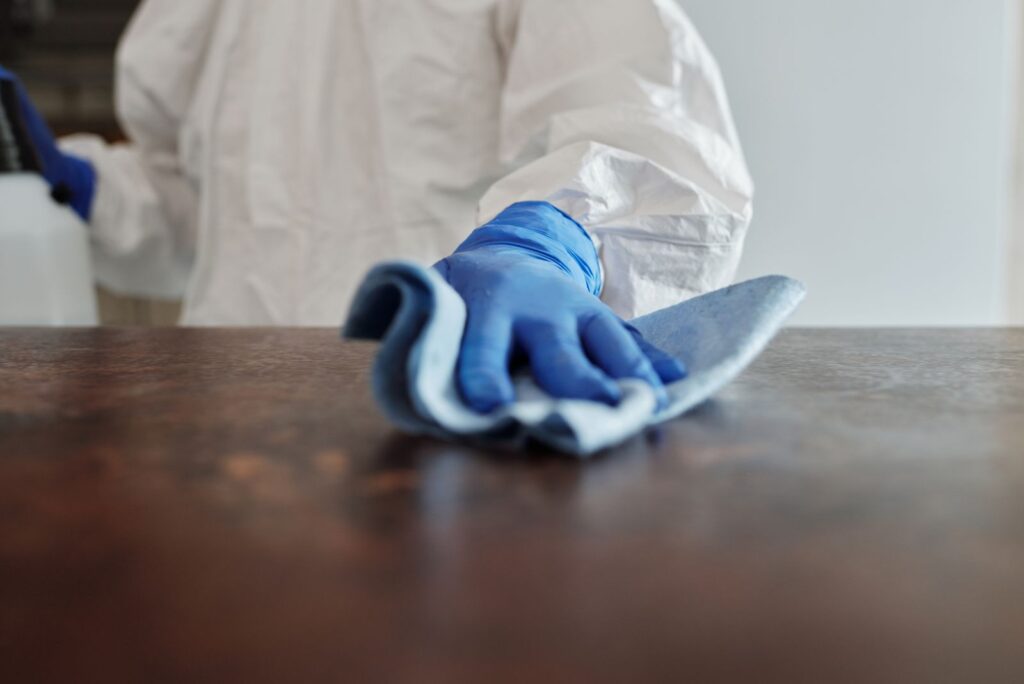
After closing, the room gets its regular cleaning. That usually means wiping all horizontal surfaces, door handles and switches, and cleaning the sink and the area around it. Then the normal bins are emptied and the floor is mopped with the right product. Cupboards with closed doors only need the outside cleaned daily.
A practical tip is to keep work surfaces as clear as possible at the end of the day. A cleaner can only wipe what is reachable. If the counter is full of paperwork, boxes and devices, the surface underneath stays as it is. Agree with your team which items may be moved and which must stay where they are, for example sensitive equipment.
Your medical office cleaning checklist at a glance
This overview brings the daily, weekly and monthly tasks together. Print it, adjust it to your rooms and add a column for who is responsible.
| Area | Daily | Weekly | Monthly |
|---|---|---|---|
| Waiting room | Chairs, tables, door handles, bins, floor | Chair legs, skirting boards, plants and decoration | Radiators, high shelves, behind furniture |
| Reception | Counter, card terminal, phone, pens, floor | Inside drawers that are used often, printer area | Cable areas under the desk, shelf tops |
| Treatment rooms | Surfaces, sink, switches, handles, bins, floor | Fronts of cupboards, stools, lamp arms | Vents, tops of cupboards, behind equipment |
| Toilets | Toilet, sink, taps, tiles nearby, refills, floor | Full tile wipe, mirror edges, dispensers inside | Grout check, behind the toilet, extractor fan cover |
| Staff kitchen | Counters, sink, table, coffee machine outside | Fridge clear-out, microwave inside | Inside cupboards, under the sink |
| Corridors and entrance | Handrails, doors, floor, entrance mat | Door frames, glass in doors | Ceiling lamps, wall marks at trolley height |
Weekly and monthly tasks that often get skipped
Daily cleaning keeps a practice running. The weekly and monthly tasks keep it looking cared for. They are also the first to disappear when the schedule gets tight.
Once a week, plan time for the spots that collect dust slowly. That means chair legs, skirting boards and the lower parts of doors where trolleys and feet bump against them. It also means the glass panels in doors that patients push open with their palms. In the staff kitchen, clear out the fridge so that nothing older than a week stays inside.
Once a month, look up and look behind. Air vents, the top of tall cupboards, lamp covers and the gap behind treatment couches or desks. These places are not seen by patients every day, but dust there ends up on surfaces below. Window cleaning is a separate topic. Many practices plan it a few times a year, depending on how much the glass is exposed to street dirt.
A good habit is to write the weekly and monthly tasks onto fixed days. For example, weekly tasks always on Thursday evening, monthly tasks on the first Friday. A plan with dates gets done. A plan that says “regularly” usually does not.
Common mistakes in practice cleaning
Most problems in practice cleaning are not about effort. They come from small habits that seem harmless.
- Wiping disinfectant dry too quickly. Disinfectants only work if the surface stays wet for the contact time printed on the product.
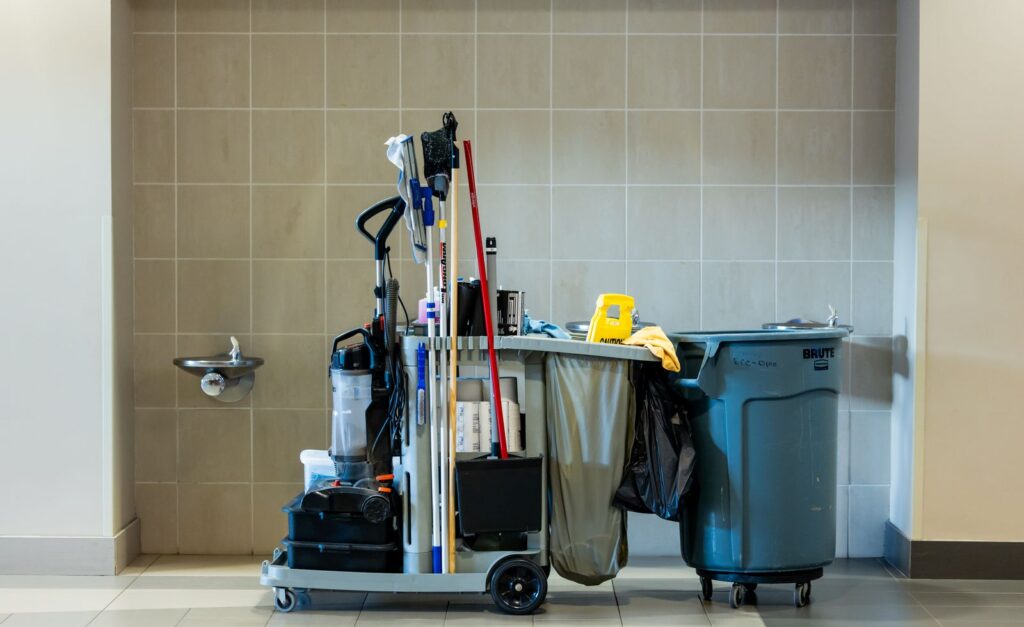
- Using one cloth everywhere. Separate cloths for toilets and for other areas, for example by colour, stop dirt from travelling.
- Mixing products. Combining cleaners can damage surfaces or create fumes, so use each product as the label says.
- Cleaning in the wrong order. Work from clean to dirty and from top to bottom, with the floor last.
Another common gap is the hand-over between people. Say a staff member notices a spill in a treatment room at 18:00. A simple way to tell the evening cleaner helps, such as a note on the checklist itself.
Timing cleaning around your opening hours
Cleaning a practice while patients are waiting is uncomfortable for everyone. Wet floors, a vacuum running next to the reception and a cleaning trolley in the corridor do not fit a calm waiting room. That is why most practices clean either early in the morning before opening or in the evening after the last patient.
Evening cleaning has the advantage that the rooms are ready for the next morning. Morning cleaning works well if your practice closes late or if the evening is used for paperwork. Some practices split the work, with the floors in the evening and a short round through the toilets and reception before opening.
If you would rather not hand the evening cleaning to your own staff, this is where a cleaning company can help. Spotless offers regular cleaning for offices and practices in Düsseldorf and the surrounding area, including cleaning with disinfection matched to the requirements of your practice. Appointments can be early in the morning, late in the evening or at the weekend. The same cleaner comes each time, so they get to know your rooms and your checklist, and you can ask for a switch if needed. Scope, schedule and terms are agreed individually with each practice. We are a young company, and our insured team does the work. If something is not right, tell us and we will fix it.
Start with the table above and adjust it to your rooms and your hygiene plan. If you would like support, send us a short list of your rooms, your opening hours and a few photos. You will get a free, non-binding quote based on your information. You can request your quote here, and we are reachable Monday to Sunday from 08:00 to 16:00.
Questions about cleaning a medical practice
How often should a medical practice be cleaned?
The main areas, such as the waiting room, reception, treatment rooms and toilets, need cleaning every day. Add weekly tasks for furniture and fittings and monthly tasks for vents, high surfaces and behind equipment. Your hygiene plan sets the exact requirements.
Who disinfects treatment surfaces between patients?
In most practices, the medical staff do this between appointments, as described in the hygiene plan. The regular cleaning of the room usually happens after closing.
Does a cleaning checklist replace the hygiene plan?
No. The hygiene plan of your practice always comes first. A checklist helps you turn it into clear daily, weekly and monthly tasks and shows who is responsible for what.
Can practice cleaning take place outside opening hours?
Yes. With Spotless, cleaning appointments can be early in the morning, late in the evening or at the weekend, so patients are not disturbed.
What does practice cleaning with Spotless cost?
Practice and office cleaning is priced by individual quote. Send us your rooms, opening hours and a few photos, and you will get a free, non-binding quote with a final price.