
A good house cleaning supplies checklist for a regular cleaner covers three things. You need a few basic products: all-purpose cleaner, dish soap, glass cleaner, bathroom and toilet cleaner, limescale remover and floor cleaner. You also need the right tools (vacuum, mop and bucket, microfibre cloths, sponges, gloves) and small items like bin bags. In German shops you will find them as Allzweckreiniger, Spülmittel, Glasreiniger, Badreiniger, WC-Reiniger, Kalkreiniger and Bodenreiniger.
Keep everything together in one place and your cleaner can start the moment they arrive. With many regular cleaning arrangements, the cleaner works with what is in your cupboard. So what you buy decides how much they can get done in the time you pay for. Below you will find the full list and what each German label means. You will also see useful extras for kitchens, bathrooms, pets and sensitive floors, and the mistakes that cost time on every visit.
Your house cleaning supplies checklist at a glance
This table covers the basics for a normal apartment or house. Print it, take it to the drugstore, and tick things off. Most homes need nothing more than this for weekly or fortnightly cleaning.
| Item | German name on the shelf | What it is used for |
|---|---|---|
| All-purpose cleaner | Allzweckreiniger | Worktops, doors, light switches, tables, most washable surfaces |
| Dish soap | Spülmittel | Dishes, greasy spots, gentle cleaning mixed with warm water |
| Glass cleaner | Glasreiniger | Mirrors, glass shower walls, glass tables and cabinet doors |
| Bathroom cleaner | Badreiniger | Sinks, tiles, taps, shower trays and bathtubs |
| Limescale remover | Kalkreiniger or Entkalker | White water marks on taps, shower heads and tiles |
| Toilet cleaner | WC-Reiniger | Inside the toilet bowl, under the rim |
| Cream cleanser | Scheuermilch | Stubborn spots on hobs, enamel sinks and bathtubs |
| Floor cleaner | Bodenreiniger or Wischpflege | Tiles, vinyl and laminate (check the label for wooden floors) |
| Microfibre cloths | Mikrofasertücher | Dusting and wiping, ideally in two or three colours |
| Bin bags | Müllbeutel | Every bin in the home, including the one for packaging |
A tip from practice: use one cloth colour for the bathroom and toilet and another for the kitchen. Your cleaner will do the same if the cloths are there, and nobody wonders which cloth has been where.
The tools your cleaner needs to do a proper job
Products are only half the list. A cleaner with a good spray but a broken mop loses time on every room. These are the tools worth checking before the first visit.
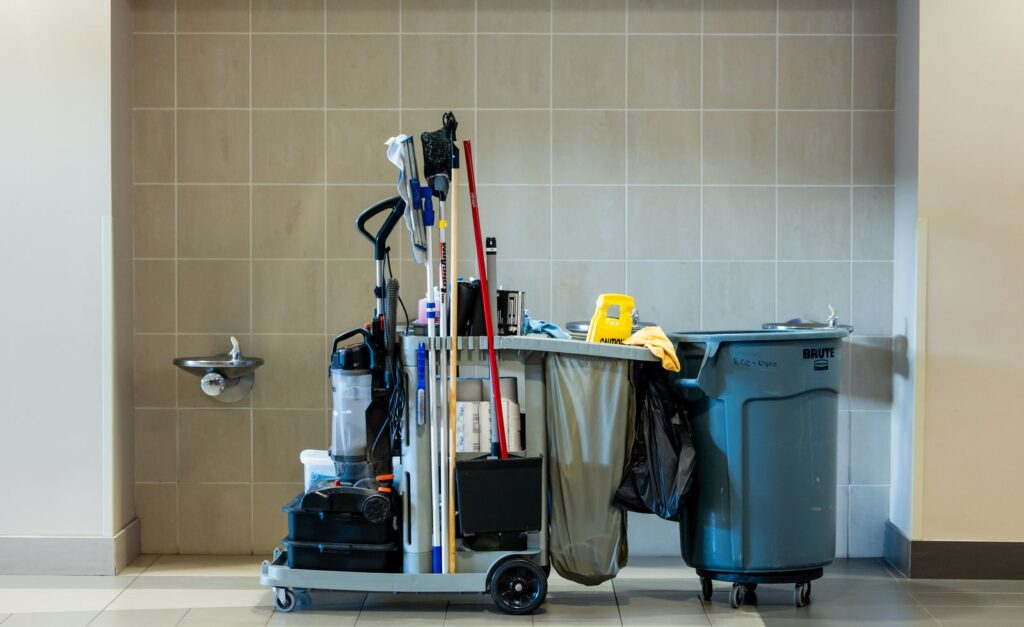
- Vacuum cleaner that works well, with spare bags (Staubsaugerbeutel) or an emptied dust container and a clean filter.
- Mop and bucket (Wischmopp and Eimer), with a replacement mop head (Ersatzbezug) once the old one looks grey.
- Sponges and a scrubbing brush (Schwämme and Scheuerbürste) for corners, grout and the area around taps.
- Rubber gloves (Gummihandschuhe), because some cleaners prefer to bring their own and some do not.
A toilet brush that is not falling apart and a dustpan and brush (Kehrblech und Handfeger) are also useful. So is a duster with a long handle for the top of wardrobes. If you want the tops of kitchen cabinets wiped, a small, stable step stool helps. Nothing more is needed for a normal home.
A full vacuum bag is the most common small problem. Suction drops, crumbs stay on the carpet, and the result looks worse than the work that went into it. Keep a pack of spare bags right next to the vacuum.
Reading German labels at dm, Rossmann or the supermarket
If you are new to Germany, the cleaning aisle can be confusing. Many products look alike and the instructions are often only in German. A few words help a lot.

Words you will see often
Reiniger simply means cleaner. Konzentrat means you mix it with water before use, so check the dosage on the back. Sprühflasche is a spray bottle, and Nachfüllpack is a refill pack that is usually cheaper than buying a new spray every time. Gebrauchsanweisung or Anwendung is where the instructions are.
Säurehaltig means acidic, which is typical for limescale removers and vinegar cleaners (Essigreiniger). Chlorhaltig means it contains chlorine bleach, which you find in some toilet cleaners and mould sprays. Für Naturstein ungeeignet means not suitable for natural stone such as marble. Edelstahlpflege is care for stainless steel.
Safety on the label
Never mix a chlorine product with an acidic one, for example a bleach toilet gel with a limescale remover. The combination can release harmful gases. If your home has both, store them apart and tell your cleaner which is which. Keep everything out of reach of children and pets, and look at the warning symbols on the back.
Eco-friendly options
If you prefer gentler products, look for well-known labels such as the EU Ecolabel or the Blauer Engel. Simple products like citric acid (Zitronensäure) for limescale or a mild soap for floors work fine for everyday cleaning. Your cleaner uses what you provide, so this choice is entirely yours.
Extras for kitchens, bathrooms, pets and special floors
The basic list covers most homes. Depending on your apartment, a few extras make a real difference.
Kitchen
A degreaser (Fettlöser) helps with the extractor hood and the splashback behind the hob. If you have a stainless steel fridge or dishwasher front, Edelstahlpflege removes fingerprints without streaks. Oven cleaner (Backofenreiniger) is only worth buying if you want the oven cleaned regularly. Agree on that with your cleaner first, because it takes extra time.
Bathroom
In many German bathrooms, limescale is the main topic. A good Kalkreiniger and a microfibre cloth for drying the glass after cleaning keep shower walls clear for longer. A mould spray (Schimmelentferner) can help on silicone joints. Many contain chlorine, so air the room well and never use them together with an acidic cleaner.
Pets
Say you have a dog and a terrace door in a ground-floor apartment in Oberkassel. Paw prints on the glass and hair on the sofa are part of every visit. A lint roller (Fusselrolle), a rubber pet hair brush and a vacuum with a turbo or pet brush save a lot of time. Extra microfibre cloths for the glass door are a good idea too.
Wooden floors and natural stone
Parquet and real wood need a wood floor cleaner (Parkettreiniger or Holzbodenseife) and very little water. Marble, limestone and other natural stone should never get vinegar or limescale remover, because acid can leave dull marks. Use a stone care product (Steinpflege) instead, and leave a short note so your cleaner knows which surface is sensitive.
How to set things up so your cleaner can start right away
Even a good list does not help if the products are spread across three cupboards and the balcony. A simple setup saves time on every single visit.
- Put all products, cloths and sponges into one basket or caddy and keep it in a fixed place, for example under the kitchen sink.
- Store the vacuum, mop and bucket together, ideally near the basket.
- Keep a second bottle of the products you use most, such as all-purpose and bathroom cleaner.
- Leave a short note for the first visit with sensitive surfaces, rooms with priority and how your waste is sorted.
Waste sorting is worth a sentence in that note. In Düsseldorf and the surrounding area, homes usually separate general waste (Restmüll), paper, packaging and often organic waste. If your cleaner knows which bin is which, nothing ends up in the wrong place.
At Spotless, recurring cleaning works exactly this way. Your cleaner uses the products you keep at home, and you get the same cleaner every time. After a few visits they know where the basket is and which floor needs the wood cleaner. If it does not fit, you can ask for a different cleaner. Our recurring home cleaning starts from €33.90 per hour, final price; as a small business under § 19 UStG we do not charge VAT.
Common mistakes with cleaning supplies
Most problems are small, but they come back every week. These are the ones that cost the most time.
Too many special products. Five different sprays for five surfaces sound thorough, but they often do the same job. A short, clear set is easier for you and for your cleaner.
Empty bottles and worn tools. An empty glass cleaner or a mop head that only spreads dirt means the result suffers, even if the cleaner works carefully. A quick look at the basket every few weeks is enough.
Old cloths. Microfibre cloths lose their effect when they are washed with fabric softener or used for months. Wash them without softener and replace them when they feel smooth or smell even after washing.
The wrong product on the wrong surface. Acidic cleaners on marble, too much water on parquet or scouring cream on a glass hob can cause damage that no one can undo. Tell your cleaner about these surfaces once, and keep only suitable products for them.
If you want to hand the regular cleaning to someone who learns your home over time, have a look at our house cleaning in Düsseldorf with the same cleaner every visit. Tell us briefly what should be cleaned and how often, and you get a free, non-binding quote with a final price.
Questions about cleaning supplies for your cleaner
Do I have to provide cleaning supplies for a regular cleaner?
With many regular cleaning arrangements, yes. At Spotless, recurring cleaning uses the products you keep at home. For other services, such as deep cleaning or move-out cleaning, we bring our own products.
What are the basic cleaning supplies every home needs?
All-purpose cleaner, dish soap, glass cleaner, bathroom cleaner, limescale remover, toilet cleaner, floor cleaner, microfibre cloths, sponges, a vacuum, a mop with a bucket and bin bags. That covers most apartments.
What is Kalkreiniger and do I need it?
Kalkreiniger is a limescale remover. It takes off the white water marks on taps, shower heads and tiles. In most German bathrooms it is worth having, but never use it on natural stone or together with chlorine products.
Can my cleaner use eco-friendly products?
Yes. For recurring cleaning your cleaner uses what you provide, so simply buy eco-friendly products, for example with the EU Ecolabel or Blauer Engel. For services where Spotless brings its own products, eco-friendly products are available on request.
Where can I buy cleaning supplies in Germany?
Drugstores such as dm and Rossmann, supermarkets and hardware stores all carry the basics. Refill packs are usually cheaper than buying new spray bottles each time.