

A good cleaning list for your cleaner covers three things. It says which tasks to do in each room, how often each task should happen, and which products and tools to use. Keep it to one page, put the most important jobs first, and mark anything that should not be touched. That way your cleaner knows exactly what you expect from the first visit.
If you have just moved to Düsseldorf and are hiring help for the first time, this can feel awkward. You may not know what is normal to ask for, and you may not share a first language with your cleaner. A written list solves most of that. Below you will find what to put on it, a frequency table you can copy, and the mistakes that make lists fail.
What a good cleaning list for your cleaner includes
Think of the list as a short briefing, not a contract. Your cleaner should be able to read it in two minutes and start working. A useful list has four parts.
- Priorities: the three or four jobs that matter most to you, in case time runs short.
- Tasks by room: what to do in the kitchen, bathroom, living areas and bedrooms.
- Frequency: what happens every visit and what rotates every few weeks.
- Products and no-go zones: where the products are, which surface needs what, and what to leave alone.
Add a few practical notes at the bottom. Where the key is, whether the cat may run out of the door, where the vacuum cleaner lives, and where rubbish and recycling go. In German buildings the bins are often split by type and kept in a courtyard or basement. That is not obvious to someone new to your home.
Room by room: a cleaner list of duties
Most regular cleaning follows the same pattern in every home. Use this as a starting point and cross out what does not apply to you.
Kitchen
- Wipe worktops, the hob and the front of appliances.
- Clean the sink and tap, including limescale around the base.
- Wipe cupboard handles, light switches and the table.
- Empty the bins and wipe the floor.
Jobs like cleaning the inside of the fridge, the oven or the extractor hood take longer. Put them on a rotation rather than every visit.
Bathroom
- Clean the toilet inside and out, including the base.
- Clean the shower, bath and glass, and descale the shower head and taps.
- Clean the sink, mirror and shelves.
- Wipe tiles at splash height, empty the bin and wash the floor.
Tap water can leave limescale on glass, so mention if you want the shower wall dried or squeegeed at the end. It makes a clear difference between visits.
Living room and bedrooms
- Dust reachable surfaces, shelves, window sills and skirting boards.
- Tidy cushions and throws, and make beds or change bedding if you leave fresh sheets out.
- Wipe fingerprints from doors, glass tables and the balcony door.
- Vacuum and mop the floors, including under easy-to-move chairs.
Hallway and general
Hallways collect a surprising amount of dirt, especially in autumn and winter. Ask for the doormat to be shaken out, shoes moved so the floor can be cleaned, and the front door wiped. Maybe you live in an older flat, for example in Pempelfort or Flingern, with high wooden doors and old parquet. Then note how you want the parquet treated, because it should not be mopped wet.
What to clean every visit and what to rotate
A common mistake is to put every task on the list for every visit. Then the cleaner either rushes or runs out of time before the jobs you care about most. A rotation spreads the bigger tasks over several visits, so the whole home gets covered over a month without making each visit longer.
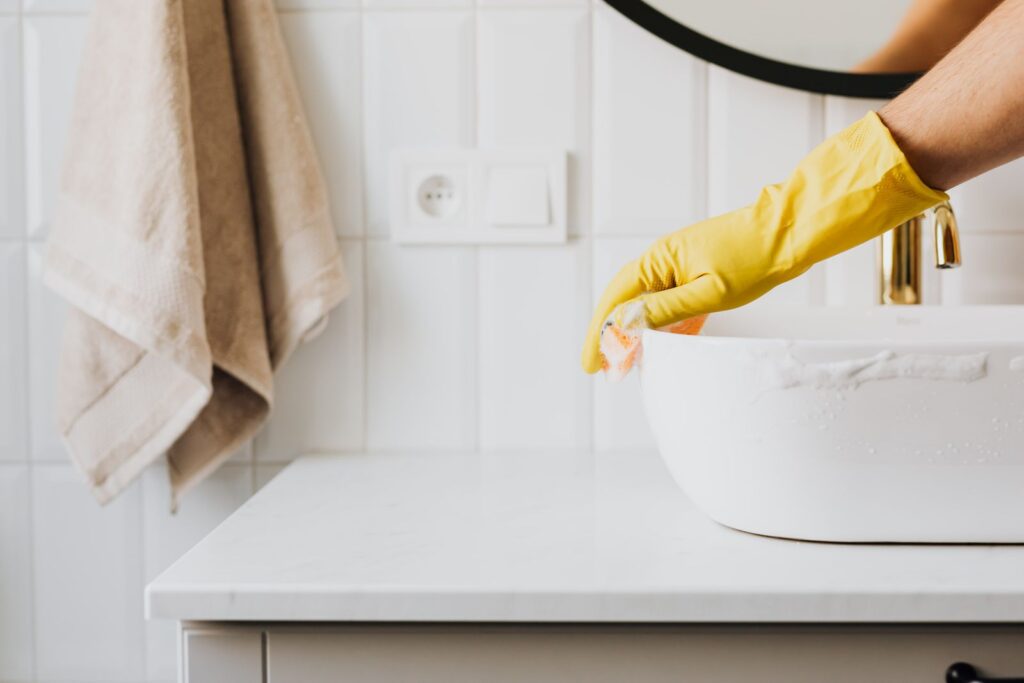
Here is a simple overview for a weekly or fortnightly cleaner. Adjust it to the size of your home and the time you book.
| Task | Every visit | Every 2 to 4 weeks | Now and then |
|---|---|---|---|
| Toilet, sink, shower | Yes | ||
| Kitchen worktops, hob, sink | Yes | ||
| Vacuum and mop floors | Yes | ||
| Empty bins | Yes | ||
| Dust shelves and skirting boards | Yes | ||
| Change bedding | Yes | ||
| Inside of fridge and microwave | Yes | ||
| Inside of oven, extractor hood | Yes | ||
| Inside of reachable windows | Yes |
One easy way to run the rotation is to give each visit a short extra task. Week one is the fridge, week two the skirting boards, week three the kitchen cupboard fronts. Write it as a small box at the bottom of your list and tick off what has been done.
Products, tools and where to find them
When your cleaner uses your products, the list should say which product goes where. This matters more than many people think. A strong limescale remover is right for the shower but can damage natural stone. A wet mop is fine for tiles but not for oiled wood.
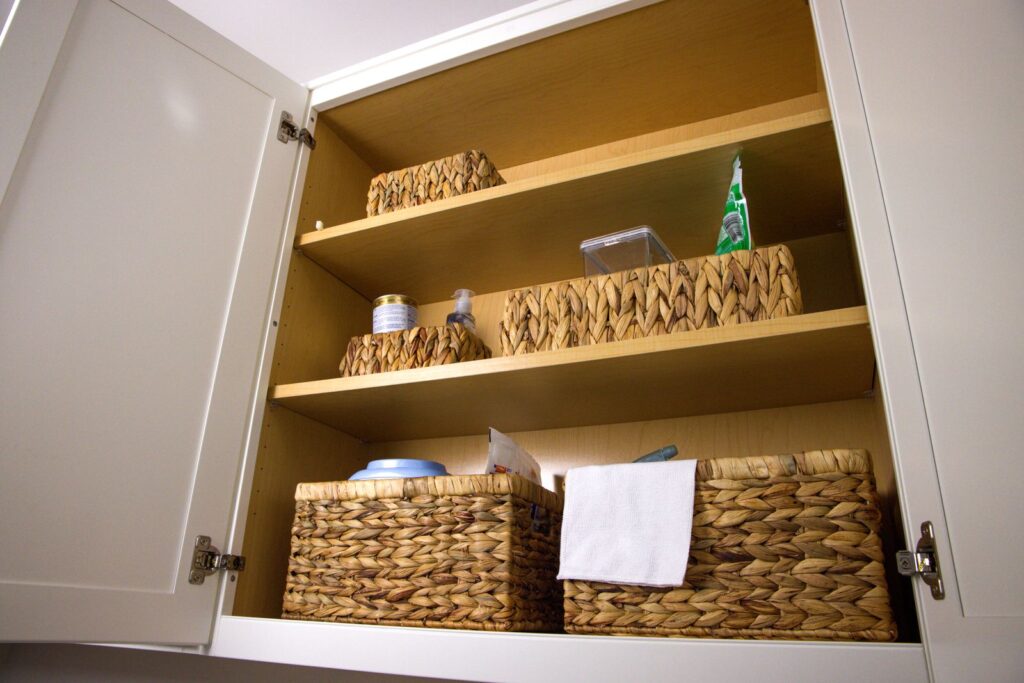
For expats, German product names can be confusing in the supermarket or drugstore. A few common ones are Allzweckreiniger (all-purpose cleaner), Glasreiniger (glass cleaner), Badreiniger (bathroom cleaner), Entkalker (descaler) and WC-Reiniger (toilet cleaner). Writing both the English and German name on your list, or simply labelling the bottles, removes any guessing.
Keep the basics in one place, such as a basket under the sink. A sensible set includes:
- An all-purpose cleaner, a bathroom cleaner and a glass cleaner.
- A descaler for taps and showers, and a toilet cleaner.
- Microfibre cloths in two colours, one for the bathroom and one for the kitchen.
- A working vacuum cleaner, a mop with a bucket, and spare bin bags.
Tell your cleaner when something is running low, or ask them to leave a note. That way nobody runs out of floor cleaner halfway through a visit.
This is also how our regular home cleaning works at Spotless. For recurring cleaning in Düsseldorf, our insured team uses your own products, so your list and your basket under the sink are what we work with. You get the same cleaner every visit, which means your list only has to be explained once, and the details become routine. If it does not feel right, you can ask for a different cleaner.
How to write the list so it actually works
A list only helps if it is easy to follow. Keep the wording short and plain. Instead of “clean the kitchen properly”, write “wipe worktops and hob, clean sink, mop floor”. One task per line is easier to read than a paragraph, especially if the cleaner reads English as a second or third language.
Imagine a two-bedroom flat in Oberkassel with a dog and two working parents. Their list could start with three priorities in bold: bathroom, kitchen floor, paw prints on the balcony door. Below that come the room tasks, then the rotation box, then a line saying “do not move papers on the desk”. That is enough. Nobody needs a five-page manual.
A few habits make a list work better over time:
- Walk through the home with your cleaner on the first visit, list in hand.
- Keep the list in the same place, for example on the fridge or inside a kitchen cupboard door.
- Update it when your needs change, such as a new baby, a pet or guests arriving.
- Give feedback early and kindly, while it is still a small detail.
Common mistakes with a cleaner’s checklist
Many problems with a checklist for professional house cleaners come from the list, not the cleaner. Here are a few to watch out for.
Too much for the time booked. If the list would take longer than the visit, something will be skipped. Decide in advance what can wait until next time.
No priorities. Without them, the cleaner has to guess what matters to you. You might care most about the bathroom, while they spend extra time on the kitchen.
Unclear no-go zones. Say clearly if a desk, a child’s room or a delicate surface should be left alone. A short line prevents misunderstandings.
Tidying expected as cleaning. Cleaners can clean surfaces much faster when they are clear. If toys, laundry and dishes are everywhere, a lot of the visit goes into putting things away. Either tidy up beforehand or write on the list that tidying is part of the job, so the time is planned for it.
A clear list makes regular cleaning calmer for both sides. You know what will be done, and your cleaner knows what you expect. If you would like help with it, have a look at our house cleaning with the same cleaner every visit. Private cleaning starts from €33.90 per hour as a final price, and as a small business under § 19 UStG we do not charge VAT. Send us your list or a short description of your home through the quote request, and you will get a quote with a final price.
Questions about cleaning lists for your cleaner
Should I leave a new list for my cleaner every visit?
No. One fixed list plus a small note for extra tasks is usually enough. Update the main list only when your needs change.
Do I need to provide cleaning products?
With Spotless, regular home cleaning uses your own products. Keep them in one place and label which product is for which surface.
How many tasks can a cleaner do in one visit?
It depends on the size of your home, how tidy it is and how long the visit is. Put your priorities first and rotate bigger jobs over several visits.
What should I do if something on the list was missed?
Mention it soon and calmly, ideally with the exact spot. At Spotless we listen to complaints and fix them, and our 24-hour satisfaction guarantee includes a free return visit.
Can I get the same cleaner every time?
With Spotless, yes. You get the same cleaner every visit, and you can ask for a different one if you prefer.